
Beyond Summarization: How to Use Grounded AI to Discover Your Next Research Gap in 48 Hours
suiceee
2026/03/16
The “Innovation Crisis” in 2026 is real. Every year, millions of papers are published, making it statistically harder to find a truly “novel” research question. Most PhD students spend months drowning in PDFs only to realize their “original” idea was addressed in a 2022 sub-clause.
Generic AI tools (like ChatGPT) often make this worse by hallucinating trends that don’t exist. To find a legitimate gap, you don’t need a generator; you need a triangulator.
In this guide, I’ll share my “Grounded Gap-Hunting” workflow — a method to move from a pile of 100+ papers to a defensible research proposal in just 48 hours using Literfy.
- The Strategy: Looking for the “White Space”
A research gap isn’t just “something no one has done.” It’s a conflict between existing findings, a limitation in current methodology, or a neglected demographic.
Traditional reading is linear. To find a gap, you need Non-Linear Synthesis. This requires shifting your focus from what a paper says to what it omits. - The 3-Step “Gap-Hunting” Workflow
Step 1: Saturation Mapping with Multi-Source Querying
You cannot claim a gap if you haven’t seen the whole field.
- The Workflow: Use Literfy to query Google Scholar, PubMed, and Semantic Scholar simultaneously.
- The Pro Tip: Don’t just search for your topic. Search for your Topic + “Conflicting results” or Topic + “Understudied.” * The Goal: Sizing the “Search Space” and populating your Shortlist with at least 40–50 high-impact papers.
Step 2: Automated “Limitation & Future Work” Extraction
The “Research Gap” is usually hidden in the last two paragraphs of every paper. - The Strategy: Instead of reading full PDFs, use Literfy’s Grounded Summary feature to specifically extract the “Limitations” and “Recommendations for Future Research” from all 50 papers in your shortlist.
- The Result: You now have a compiled document of exactly what the top minds in your field are “begging” someone else to study. This is your “Gold Mine.”
Step 3: Constructing the “Synthesis Gap Matrix”
Now, you use Literfy’s Scaffolding feature to build a thematic outline. - The Action: Create headings for different methodologies (e.g., “Quantitative vs. Qualitative”) or different populations.
- Finding the Leak: As you populate these sections with grounded evidence, you will notice “empty headings” — areas where the evidence is thin or contradictory.
- Verification: Because Literfy links every sentence back to the PDF, you can double-check if an “empty” area is truly a gap or just something you missed.
- Why This Workflow Wins Peer Review
Journal editors and reviewers are trained to spot “AI-generated fluff.” If you claim a gap, they will check your citations. By using a Grounded AI workflow, you provide:
- Traceability: Every claim about a “missing link” is backed by the citations of existing studies that failed to address it.
- Breadth: You’ve analyzed 50+ papers via Literfy, proving your gap isn’t just a result of lazy searching.
- Industrial Precision: You move from “I think this is new” to “The literature (Papers A through Z) explicitly states this is unresolved.”
- The Power Stack for High-Impact Research
To execute this “War Room” strategy, I use three pillars:
- Literfy: For the heavy lifting of multi-source discovery and grounded synthesis.

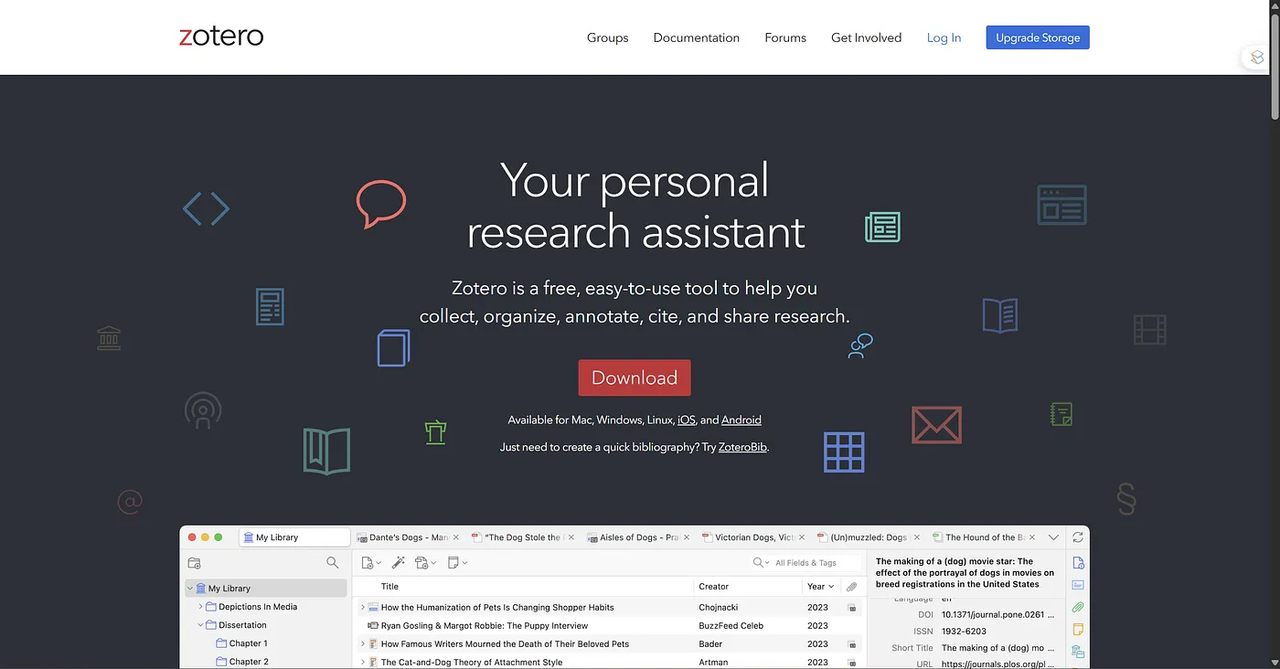
- Zotero: For archival storage of the “Gaps” found (Exported via BibTeX from Literfy).
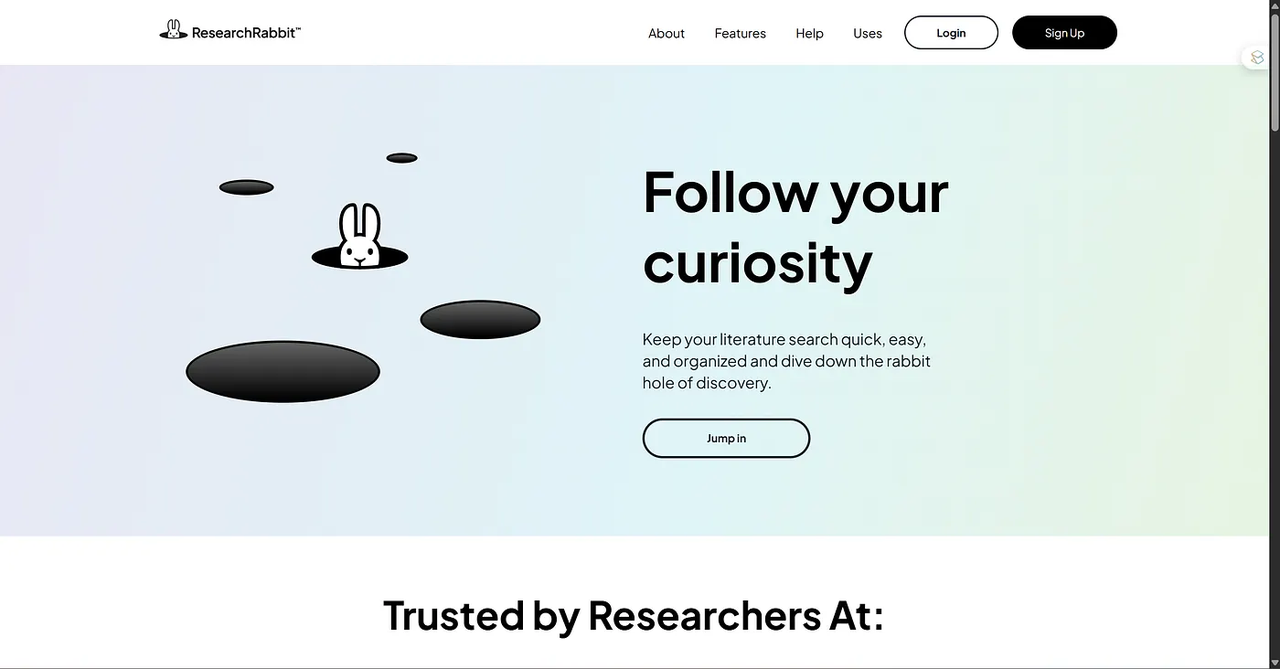
- ResearchRabbit: For visualizing the citation clusters around my newly discovered gap.
- Conclusion: Innovation is a Process, Not an Accident
Finding your PhD novelty shouldn’t feel like a lottery. It is a systematic process of filtering the “known” until only the “unknown” remains. By automating the extraction of evidence through Literfy, you stop being a reader and start being an architect of new knowledge.
Stop searching for ideas. Start synthesizing evidence.