
Stop Collecting Papers You Will Never Use
suiceee
The short answer
If you keep collecting papers without tightening the paper set, your literature review will usually get worse, not better.
That sounds counterintuitive at first. More papers should mean more coverage, more evidence, and a stronger review. In practice, the opposite often happens.
Too many loosely related sources create three predictable problems:
- the review loses focus
- the structure gets muddy
- the synthesis becomes shallow
This is why "more papers" is not the same thing as "better review quality."
Why paper overload is such a common problem
Paper overload feels productive.
A long reading list gives the impression that the review is becoming more rigorous. Search results pile up. Tabs multiply. PDFs accumulate. The project starts to look substantial.
But literature reviews are not judged by how many papers you touched. They are judged by how clearly you define the field, how well you compare the relevant studies, and how convincingly you explain what the literature actually says.
Once the paper set becomes too loose, all of that gets harder.
What too many papers do to a review
The damage usually shows up in a few ways.
The scope expands faster than the argument
When every adjacent paper gets added "just in case," the review starts describing a broader field than it can actually synthesize.
That often produces a draft that looks comprehensive on the surface but feels intellectually thin underneath.
Important papers get buried
If every source is treated as equally relevant, the papers that actually define the review stop standing out.
That makes it harder to see:
- which studies shape the debate
- which methods dominate the field
- which findings create tension
- which papers are central and which are peripheral
The outline becomes generic
This is where many reviews start collapsing into bland sections like:
- background
- current trends
- challenges
- future directions
Those headings are not always wrong. They are just often too generic to reflect the actual structure of the paper set.
Writing becomes summary-heavy
Once there are too many papers on the table, the writer often falls back on listing studies one by one.
That is not synthesis. It is accumulation.
A better standard: usable, not maximal
A strong review does not need the largest possible paper pile.
It needs a paper set that is:
- clearly scoped
- genuinely relevant
- diverse enough to support comparison
- small enough to synthesize well
That is a different goal from "download everything remotely related."
The useful question is not "How many papers did I collect?"
It is "Can this paper set support a clear review argument?"
How to stop over-collecting
The simplest fix is to make selection decisions earlier.
Start with a narrower question
Broad questions produce noisy search results. Noisy results produce bloated reading lists.
If the topic is still too wide, the paper set will stay unstable.
Treat shortlisting as a real stage
Search is not selection.
A shortlist should reflect judgment. Some papers are in. Some are out. Some are only background context and should not drive the review structure.
Group papers by function
Not every paper plays the same role.
Some papers define the field. Some introduce a method. Some show a contradiction. Some are useful context but not central evidence.
Once you start grouping papers by function, it becomes easier to cut the ones that are not really carrying the argument.
Build the outline from the shortlist, not from the full pile
This is a practical rule worth keeping.
If the outline is built from a bloated set, the writing usually inherits the same bloat.
If the outline is built from a tighter paper set, the synthesis gets sharper.
What a healthier workflow looks like
The better workflow is:
- search broadly enough to map the space
- narrow the question
- shortlist the papers that genuinely define the review
- group the shortlist into meaningful patterns
- outline from that set
- write from the structure that the papers actually support
- That sequence creates a stronger review because it replaces passive collection with active selection.
Why generic AI tools make this easier to get wrong
Generic AI tools can make paper overload worse because they reduce the feeling of friction.
If summarizing another twenty papers feels easy, the user has less pressure to decide whether those papers belong in the review at all.
That can create a dangerous illusion of progress. The workflow feels faster, but the review becomes less disciplined.
This is one reason grounded literature review tools matter. The quality problem is not only writing speed. It is paper-set quality.
Where Literfy fits
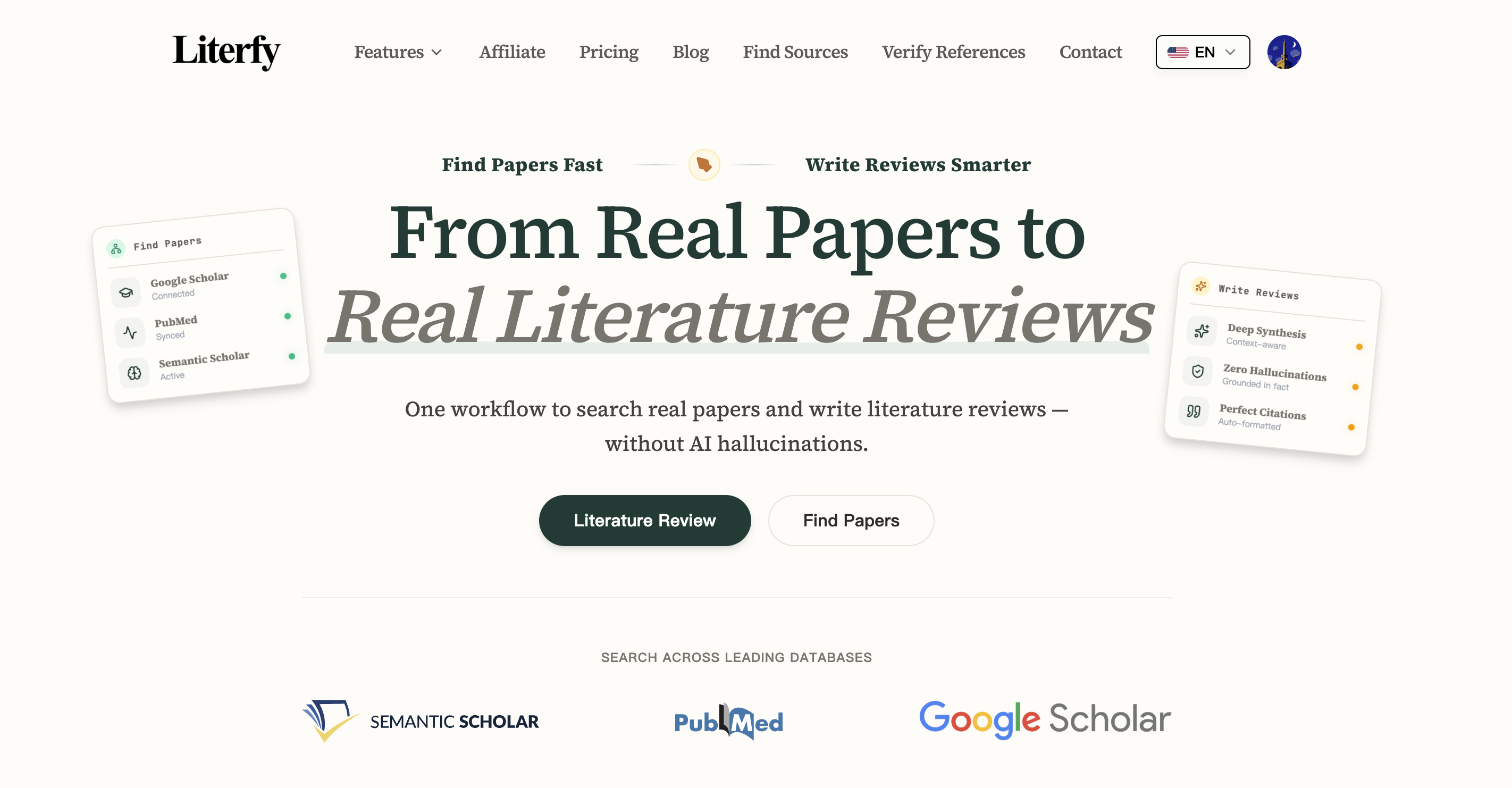
This is exactly where Literfy fits naturally.
The value is not just finding more papers. The value is building a paper-first workflow where search, shortlist, outline, and review writing stay connected.
That matters because good literature reviews do not come from endless accumulation. They come from a paper set that is tight enough to support comparison, synthesis, and judgment.
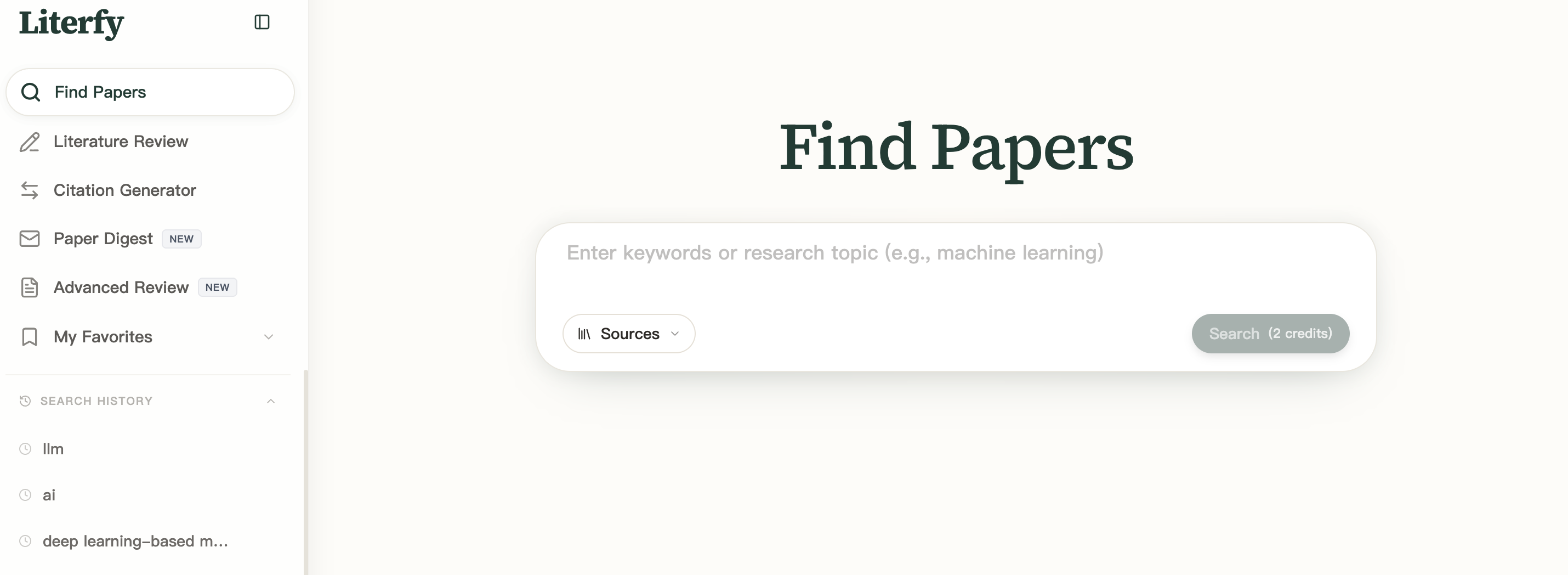
That is also why Literfy's workflow is useful: it helps move from real-paper search to shortlist, then from shortlist to outline, and only then into grounded review writing.
Final takeaway
If your literature review feels bloated, the fix is usually not to collect more papers.
The fix is to choose better.
A smaller, better-shaped paper set will often produce a stronger review than a huge pile of barely related sources.
In literature review work, clarity usually comes from selection before it comes from writing.