
Stop Acting Like a 20th-Century Scholar: The Industrialization of the Literature Review
suiceee
The "Reading Guilt" is the silent killer of academic productivity. Most researchers are trapped in a 1950s workflow: they believe that "real scholarship" requires laboriously reading every word of every PDF in their Zotero library. But we are facing a structural crisis.
Scientific papers are objectively becoming harder to read due to a surge in technical jargon and a baseline of assumed knowledge. The barrier to entry for primary research is peaking just as the volume of publications makes manual reading a physical impossibility.
If you are still reading papers linearly—from Abstract to Conclusion—you aren't being thorough; you are being inefficient. To thrive in 2026, you must stop being a "Reader" and start being an Architect of Evidence.
- The "Cognitive Debt" of Manual Research
Traditional research methods fail because they ignore Information Entropy. Students and researchers often struggle to extract key information from dense materials or find they lack the background context to parse the jargon. Even when the material is read, it is often scanned only once, which is insufficient for the deep digestion required for synthesis.
While pioneers like Scholarcy have helped lower this barrier by creating background reading lists and "flashcards" to summarize key claims, the 2026 researcher needs a more aggressive, end-to-end pipeline. You don't just need to understand a paper; you need to industrialize the synthesis of fifty.

- The Workflow: From "Narrative" to "Data Packet"
To move at the speed of modern science, you must treat every PDF as a Data Packet. This is where Literfy shifts the paradigm. Instead of providing "abstractive" summaries—which are prone to AI hallucinations—Literfy focuses on Deterministic Extraction.
The "Saturation Search"
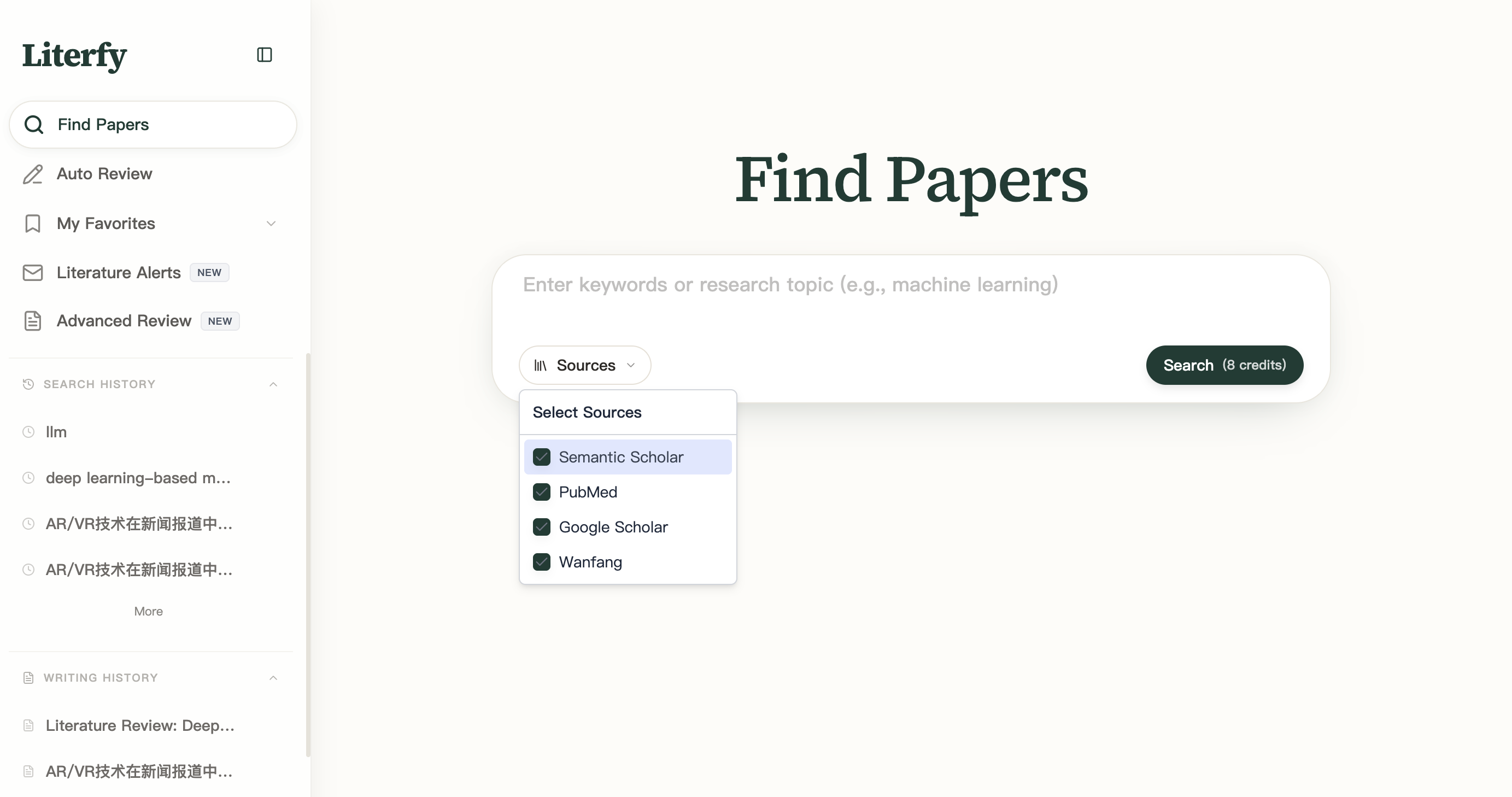
Don't wait for papers to find you. Use Literfy to query multiple high-impact databases simultaneously. Your goal is "Thematic Saturation"—ensuring your evidence pool is so deep that no reviewer can claim you missed a seminal work.
Thematic Scaffolding
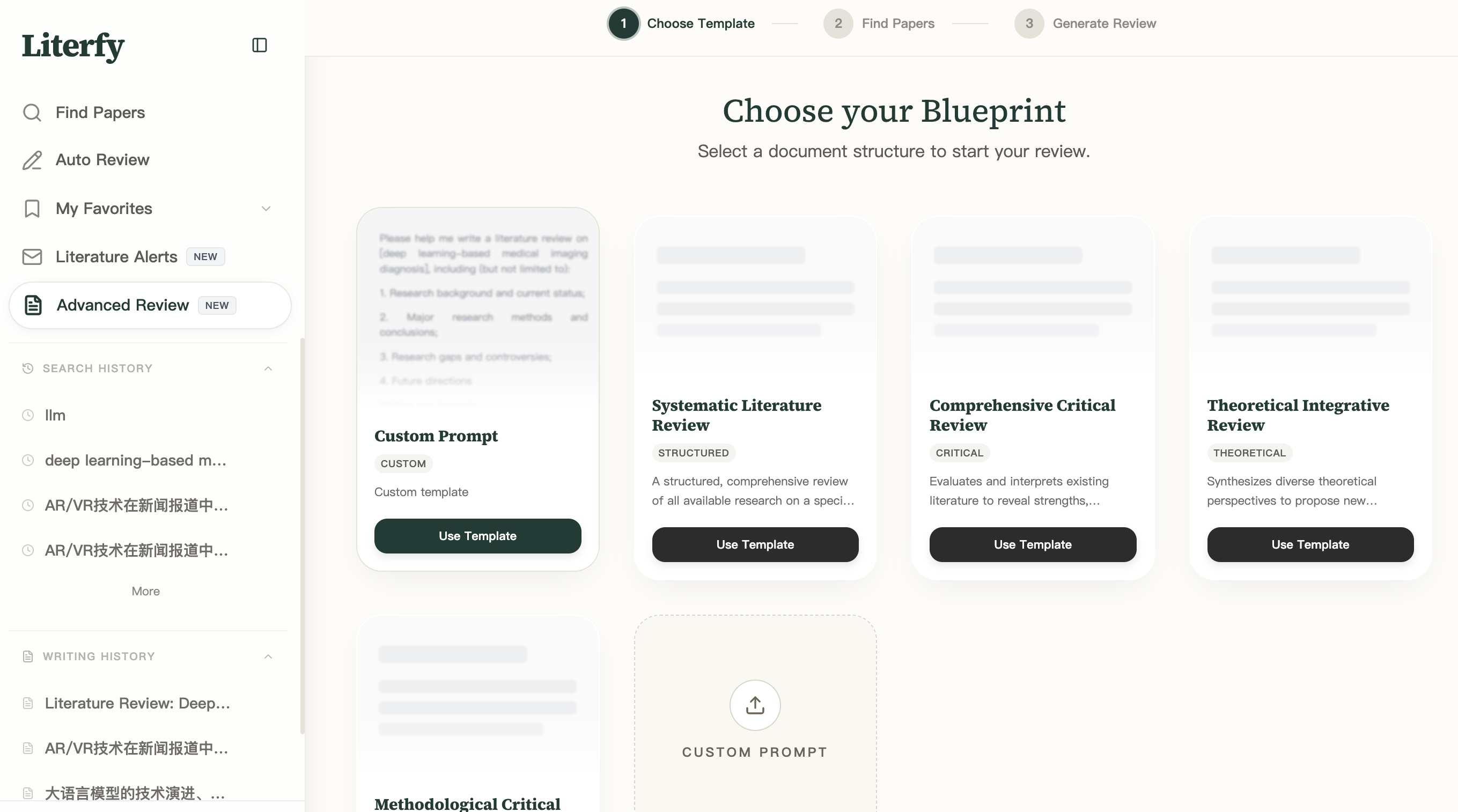 Most researchers start with a blank page and "try to write." The industrial approach is to use Literfy to build a Grounded Scaffold.
- The Strategy: Extract the specific "limitations" and "methodological conflicts" across your entire shortlist.
- The Result: Literfy aligns these snippets into a thematic outline, turning a month-long literature review into a two-day "assembly" project.
- The "Audit Trail": Bulletproofing Your Integrity
The greatest fear of the AI era is "unconscious plagiarism" or "hallucinated facts." Scholars are often concerned that AI-generated summaries could be seen as cheating. Scholarcy addresses this by ensuring summaries are extractive—directly traceable to the original text.
Literfy evolves this into the Zero-Hallucination Pipeline.
Unlike general AI models that "predict" sentences, Literfy anchors every thought to a specific page and line in your source PDF.
- Referenced Synthesis: Citations are preserved and linked directly to the source.
- Integrity by Design: By using Literfy’s "Search-then-Write" architecture, you aren't "using AI to write"; you are using AI to manage evidence. This creates a perfect audit trail that protects you from "citation plagiarism".
Conclusion: Liberate the Architect
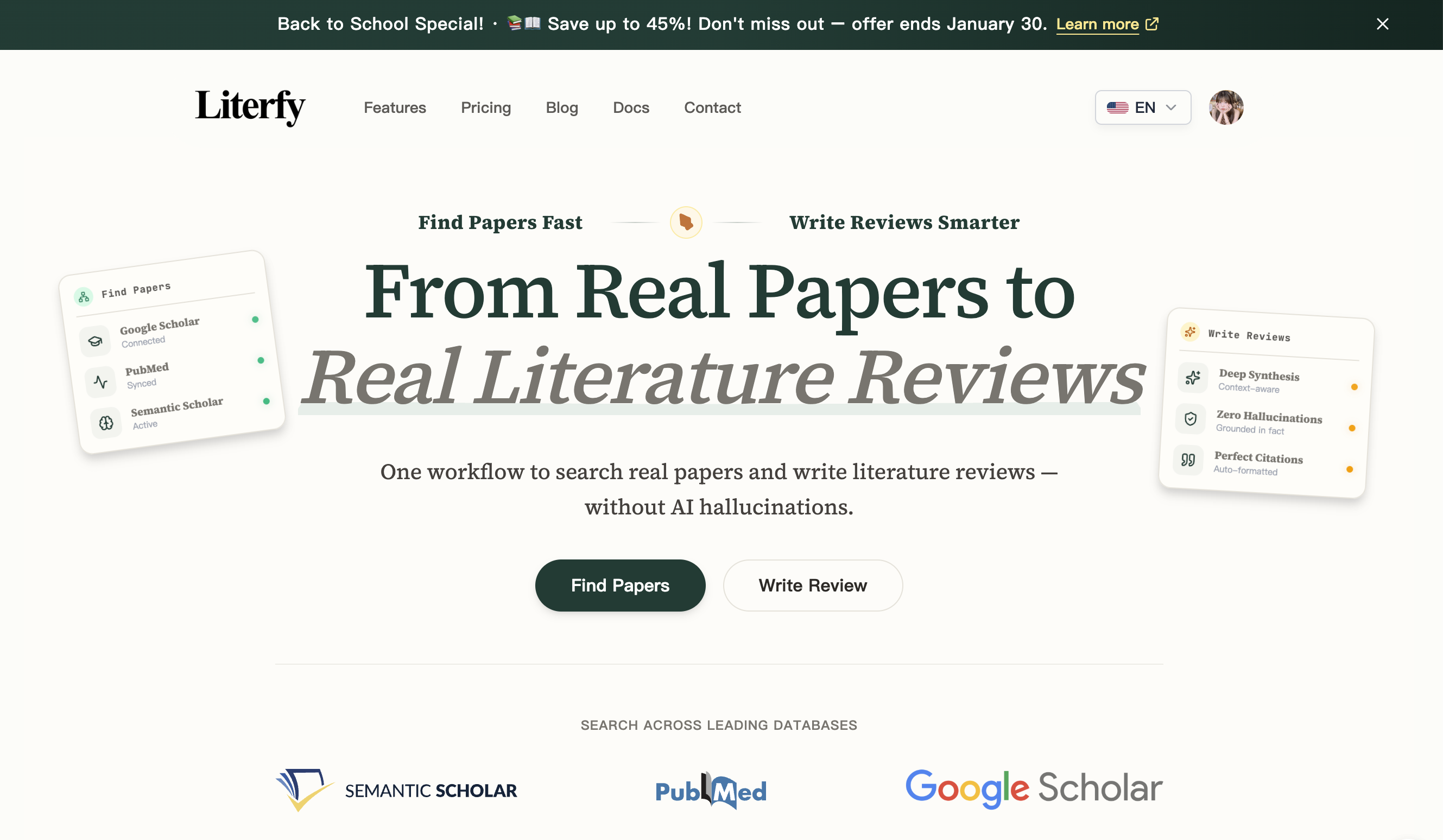 The goal of a PhD is to create new knowledge, not to act as a human OCR machine for dense PDFs. As the research landscape becomes more complex, those who cling to manual reading will be left behind by those who master Industrialized Synthesis.
Stop being a librarian of your own notes. Start being the architect of your field’s next breakthrough.