
Beyond Summarization: How to Use Grounded AI to Discover Your Next Research Gap in 48 Hours
suiceee
3월 16, 2026
The “Innovation Crisis” in 2026 is real. Every year, millions of papers are published, making it statistically harder to find a truly “novel” research question. Most PhD students spend months drowning in PDFs only to realize their “original” idea was addressed in a 2022 sub-clause.
Generic AI tools (like ChatGPT) often make this worse by hallucinating trends that don’t exist. To find a legitimate gap, you don’t need a generator; you need a triangulator.
In this guide, I’ll share my “Grounded Gap-Hunting” workflow — a method to move from a pile of 100+ papers to a defensible research proposal in just 48 hours using Literfy.
- The Strategy: Looking for the “White Space”
A research gap isn’t just “something no one has done.” It’s a conflict between existing findings, a limitation in current methodology, or a neglected demographic.
Traditional reading is linear. To find a gap, you need Non-Linear Synthesis. This requires shifting your focus from what a paper says to what it omits. - The 3-Step “Gap-Hunting” Workflow
Step 1: Saturation Mapping with Multi-Source Querying
You cannot claim a gap if you haven’t seen the whole field.
- The Workflow: Use Literfy to query Google Scholar, PubMed, and Semantic Scholar simultaneously.
- The Pro Tip: Don’t just search for your topic. Search for your Topic + “Conflicting results” or Topic + “Understudied.” * The Goal: Sizing the “Search Space” and populating your Shortlist with at least 40–50 high-impact papers.
Step 2: Automated “Limitation & Future Work” Extraction
The “Research Gap” is usually hidden in the last two paragraphs of every paper. - The Strategy: Instead of reading full PDFs, use Literfy’s Grounded Summary feature to specifically extract the “Limitations” and “Recommendations for Future Research” from all 50 papers in your shortlist.
- The Result: You now have a compiled document of exactly what the top minds in your field are “begging” someone else to study. This is your “Gold Mine.”
Step 3: Constructing the “Synthesis Gap Matrix”
Now, you use Literfy’s Scaffolding feature to build a thematic outline. - The Action: Create headings for different methodologies (e.g., “Quantitative vs. Qualitative”) or different populations.
- Finding the Leak: As you populate these sections with grounded evidence, you will notice “empty headings” — areas where the evidence is thin or contradictory.
- Verification: Because Literfy links every sentence back to the PDF, you can double-check if an “empty” area is truly a gap or just something you missed.
- Why This Workflow Wins Peer Review
Journal editors and reviewers are trained to spot “AI-generated fluff.” If you claim a gap, they will check your citations. By using a Grounded AI workflow, you provide:
- Traceability: Every claim about a “missing link” is backed by the citations of existing studies that failed to address it.
- Breadth: You’ve analyzed 50+ papers via Literfy, proving your gap isn’t just a result of lazy searching.
- Industrial Precision: You move from “I think this is new” to “The literature (Papers A through Z) explicitly states this is unresolved.”
- The Power Stack for High-Impact Research
To execute this “War Room” strategy, I use three pillars:
- Literfy: For the heavy lifting of multi-source discovery and grounded synthesis.

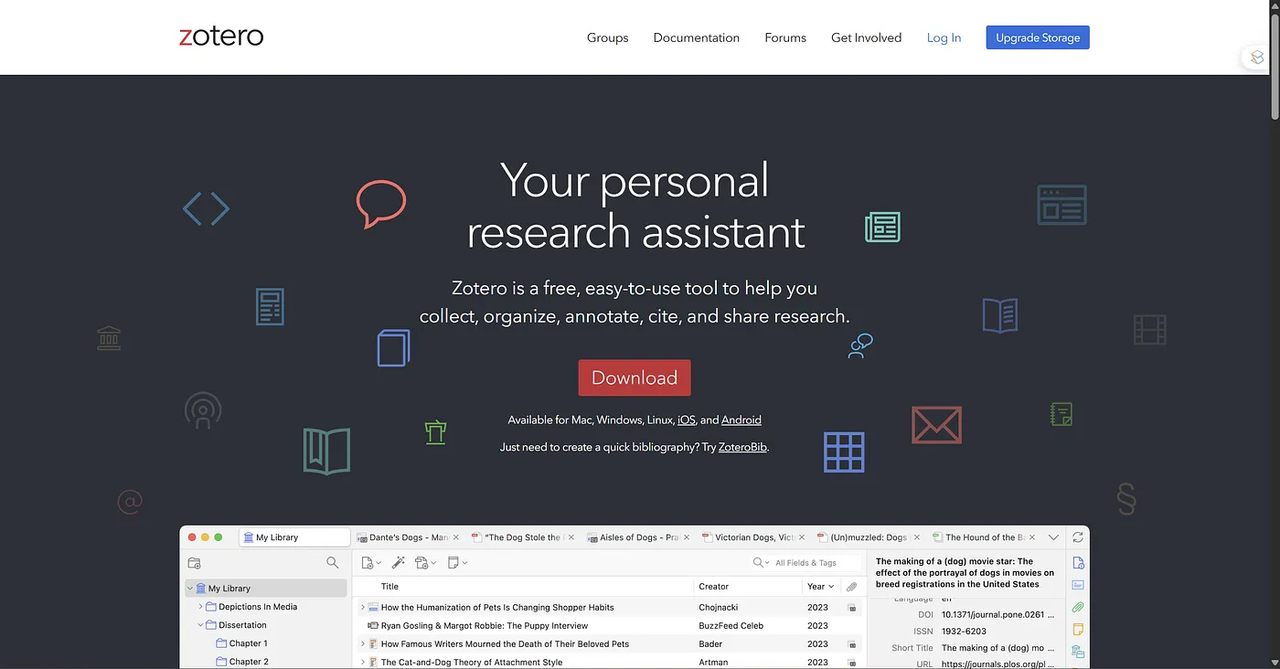
- Zotero: For archival storage of the “Gaps” found (Exported via BibTeX from Literfy).
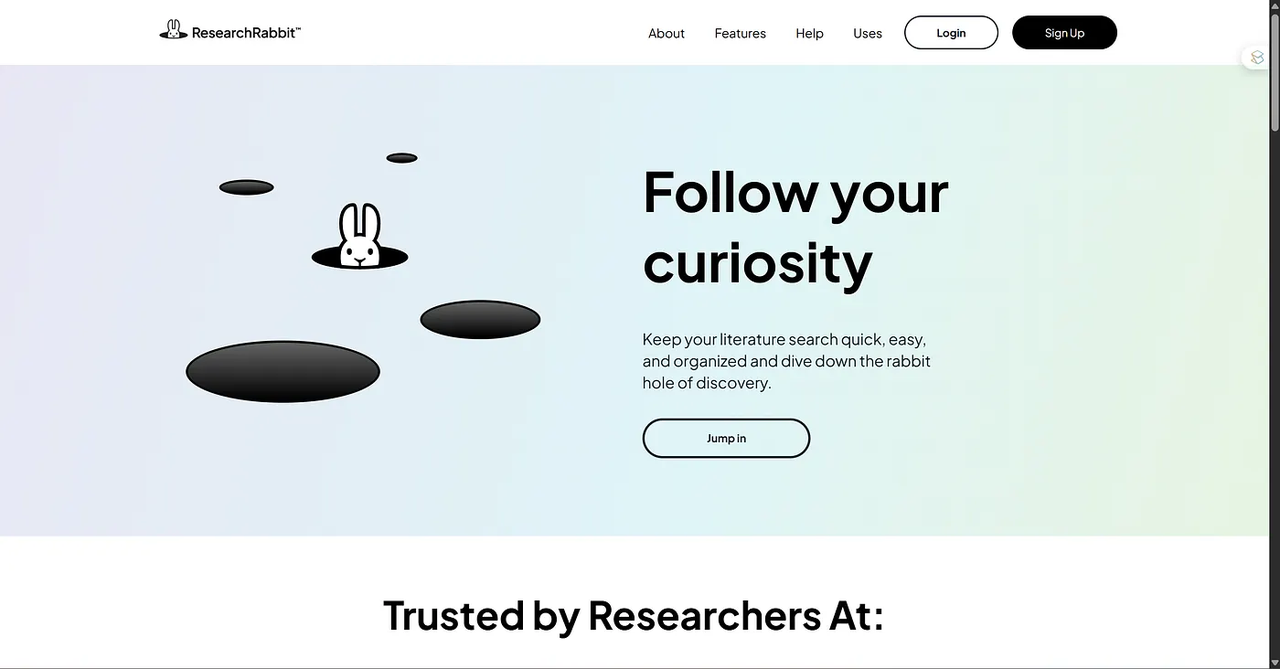
- ResearchRabbit: For visualizing the citation clusters around my newly discovered gap.
- Conclusion: Innovation is a Process, Not an Accident
Finding your PhD novelty shouldn’t feel like a lottery. It is a systematic process of filtering the “known” until only the “unknown” remains. By automating the extraction of evidence through Literfy, you stop being a reader and start being an architect of new knowledge.
Stop searching for ideas. Start synthesizing evidence.